
Even as you fight the ongoing health challenge, here are some tips to strengthen your personal finance in the time of coronavirus.

Foreign portfolio investors (FPIs) from Mauritius may face higher scrutiny after the amendment in the India-Mauritius tax treaty introduced a principle purpose test (PPT) to prevent treaty abuse by taxpayers. The Mauritius government had in February decided to amend the double taxation avoidance agreement (DTAA) with India to align with the Organisation for Economic Co-operation and Development's proposal on base erosion and profit shifting. Although the agreement between India and Mauritius was signed on March 7, the protocol of the amendment was made public for the first time on Wednesday, said legal experts.

Among the Sensex firms, Larsen & Toubro, UltraTech Cement, JSW Steel, Titan, Bajaj Finance, Wipro, Tech Mahindra and Nestle were the major laggards. Maruti, Power Grid, Axis Bank, State Bank of India, NTPC, HDFC Bank, ITC and IndusInd Bank were the gainers.

Debt-saddled telecom operator Vodafone Idea Ltd's Rs 18,000 crore follow-on offering (FPO) opened to a modest response on Thursday with just 26 per cent of shares on offer being sought by investors. Of the 1,260 crore shares on offer, 331.24 crore was subscribed on Thursday, according to information on the BSE. Qualified institutional buyers picked up 61 per cent of their 360 crore shares reserved for them while non-institutional investors sought 28 per cent out of 270 crore shares earmarked for them.

'India's fundamentals are a lot better (than those of other emerging market economies).' 'India will suffer (witness a fall in its stock market) what I call the second order effect.' 'And the second order will happen when these funds (belonging to macro and hedge fund investors and which have leveraged Japanese yen-carry trades), because they lose money elsewhere as lot of their positions were financed by borrowing Japanese yen, will have to book profits in investment destinations where they are making money, including in markets like India.' 'They (these investors) will have to effectively sell in countries like India and which is the consequence (the crash in equity markets) that Indian markets might see.'

The avoidable stresses and strains in ties helped in one way. It showed for the entire region how a matured India handled diplomatic relations, especially with a smaller and suspicious neighbour, with practised dignity and patience, unruffled by provocations in word, deed and action, observes N Sathiya Moorthy.

Finance Minister Nirmala Sitharaman will present her sixth straight Budget ahead of the Parliamentary elections, matching the record of former Prime Minister Morarji Desai. Sitharaman in her pre-election Budget, which technically is a vote on account and popularly termed an interim Budget, will seek Parliament's nod for a grant in advance to meet the central government's essential expenditure for the first four months of the new fiscal year that starts in April. A new government elected after the April/May general elections will present the full Budget, likely in July.

rediffGURU Ramalingam Kalirajan answers your personal finance queries.

Dear Finance Minister, We don't expect magic, just a little understanding and some tax relief that feels like a real reward, not a bare minimum. A little extra fuel in our wallets could go a long way, pleads Vatsal Ramaiya

Suitors for Punjab and Maharashtra Co-operative Bank (PMC Bank) may have to infuse additional capital of nearly Rs 750 crore so that the payout per depositor is more than the Rs 5 lakh sum assured by the Deposit Insurance and Credit Guarantee Corporation (DICGC). The Reserve Bank of India (RBI) has also slotted its board meeting on March 19 in Mumbai - a fortnight short of the current deadline to find a resolution for the beleaguered bank and the moratorium placed on it comes to an end. Sources close to the PMC Bank transaction said that the central bank wants the suitors "to go the extra mile so that depositors can get more than the Rs 5 lakh insured by the DICGC". This is also to ensure that the new owners of the bank - who are to be issued a small finance bank (SFB) licence - are serious and have deep pockets.

Led by a new generation of entrepreneurs, India's family offices are shifting from traditional investments in physical and tangible assets like real estate to investing in technology, healthcare, and retail stocks. This new wave of family offices is engaging in stock market investments, including pre-IPO placements and secondary market operations. "Born into a world of technology, the next generation, especially those born after 2000, view technology as equally crucial as finance for running a business.

'I found it unbelievable that L&T said 45,000 jobs were waiting to be filled because of unavailability of suitable skillsets.' 'So, when the Opposition sweepingly says there are no jobs, I'm sorry... I'm not saying it's raining jobs, but there are jobs. The (skill) gap has to be bridged.'

>It's not easy to predict the market. But there are at least two positive factors to back the PSU banks, explains Tamal Bandyopadhyay.

Decisions should not be based on feelings, such as optimism or pessimism about the stock market or specific investment products, suggests Avinash Luthria.

Top gainers in the Sensex pack included Bajaj Finance, ONGC, Yes Bank, HDFC, HCL Tech, Tech Mahindra, TCS, ICICI Bank and RIL, rising up to 3.57 per cent.

Finance capital is the creative minority that Toynbee spoke of -- one which takes more than it gives to society.
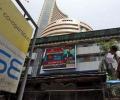
The stock exchange BSE has called off the merger of its unit at the Gujarat International Finance Tec-City International Financial Services Centre (GIFT IFSC), India International Exchange (India INX), with NSE International Exchange (NSE IX), a similar unit floated by rival National Stock Exchange (NSE), according to sources familiar with the development. BSE and NSE had been in discussions for the merger for over a year, but it has yielded no results, they said.

Most NBFCs will have to slow down their loan growth. Some of the most leveraged will have to sell a part of their assets (or loan book) to banks to raise incremental capital. Others may have to knock on the door of their deep-pocketed parents.

Stories are legion about the Karatmeter's use at that time. Hundreds of people standing in queue for testing, customers breaking down after discovering the actual purity of their jewellery and then becoming irate about the jeweller who had gypped them, the local jewellery industry leaning heavily on the Tanishq franchisees to desist from using it, some jewellers even threatening violent action.
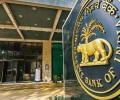
GDP growth of 7.7 per cent in the first half of this fiscal has "left sceptics gasping and woefully behind the curve", an RBI article said on Wednesday. It also stressed the buildup in the growth momentum is likely to be sustained. The article on the state of the economy published in the Reserve Bank's December Bulletin on Wednesday also said CPI-based retail inflation is expected to ease to 4.6 per cent in the first three quarters of 2024-25 from 5.6 per cent in November.

P V Subramanyam clears some misconceptions about debt funds.

Debt-ridden Vodafone Idea is planning to begin 5G rollout in six months in select cities and places where 5G device concentration is high, a senior company official said on Friday. Vodafone Idea CEO Akshaya Moondra said the company expects capital expenditure of the company to be in the range of Rs 50,000-Rs 55,000 crore over the next three years with focus on expanding and strengthening 4G coverage.

HDFC Bank on Tuesday said RBI has given approval to the group to acquire up to 9.5 per cent stake each in six lenders, including ICICI Bank and Axis Bank.

Banerjee said her microphone was stopped after five minutes, while other chief ministers were allowed to speak for longer durations.

The size of Reserve Bank's balance sheet increased by 11.08 per cent to Rs 70.47 lakh crore as on March 2024, leading to the highest-ever dividend payout to the government, according to the central bank's annual report. In actual terms, the increase was Rs 7,02,946.97 crore over Rs 63.45 lakh crore as on March 2023.

When Finance Minister Nirmala Sitharaman tables her Budget on February 1, the numbers could be something to cheer.

The identity of the informant shall be kept a secret, it said.

The pandemic should force you to take a hard look at the downside risks that could jeopardise your finances.

'I have been advising investors since the last couple of months to at least take their capital out.' 'Most of the people have made 50-60 per cent in the market, if not more, they must at least take their capital out.'

The government hopes the latest action will lead to banks also lowering the cost of borrowing for corporate and individual borrowers.

The defence budget was on Thursday increased to Rs 6.21 lakh crore for 2024-25 in a modest hike of 4.72 per cent from last year's allocation of Rs 5.25 lakh crore amid India's continuing border row with China in eastern Ladakh as well as concerns over evolving security situation in the strategic waterways.

In order to reduce government litigations, the Union Finance Minister Nirmala Sitharaman on Saturday said the GST Council has fixed a monetary limit for filing appeals by the tax department before the various appellate authorities. It has recommended a monetary limit of Rs 20 lakh for GST Appellate Tribunal, Rs 1 crore for the High Court and Rs 2 crore for the Supreme Court for filing of appeals by the department before these legal forums, she said after the 53rd GST Council meeting held in New Delhi.

If the Budget makes no big announcements on new schemes, projects, or tax giveaways, the government would face a major political dilemma as it may have to reluctantly consider shunning the practice of unveiling pre-election sops to woo voters, notes A K Bhattacharya.

The Hinduja group is learnt to be looking at alternative means of financing, including private credit, to fund its Rs 9,661 crore all-cash offer to acquire Reliance Capital. The regulator, Insurance Regulatory & Development Authority of India (Irdai), had earlier rejected the collateral offered by the group to raise funds. The Hinduja group was in talks with Barclays, JPMorgan, Cerberus Capital Management and Apollo Global Management to raise up to $850 million.

Discussion paper fixes Rs 1,000 cr as minimum capital for these specialised banks

Automotive (auto) major Mahindra & Mahindra (M&M), which is readying to launch nine sport utility vehicles (internal combustion engine/ICE), seven Born Electric Vehicles (BEVs), and seven light commercial vehicles by 2030, has outlined an investment of Rs 27,000 crore in its auto business between 2024-25 (FY25) and 2026-27 (FY27). Over the next three years, the company will deploy Rs 37,000 crore, including its auto business, farm business (Rs 5,000 crore), and service business (Rs 5,000 crore).

Debt mutual funds are likely to be stripped of the long-term tax benefit if they invest less than 35 per cent of their assets in equities. Such mutual funds will attract short term capital gains tax. The government is likely to make such a proposal in the form of an amendment to the Finance Bill 2023 in the Parliament, sources said.

'Till the time you have the equations right the market will remain concerned.' 'If the (coalition) government is taken care of, then probably (the markets will) come back to its rhythm.'

'Generating employment requires a shift in policy.' 'If not, the country will face economic, social and political challenges in the coming years.'

'The BJP's numbers in this government are almost the same as those enjoyed by the Congress under P V Narasimha Rao when the reform process was kicked off in 1991.' 'As before, the only constraints on the prime minister's actions are internal, not external.' 'They come from his own assessment of the political consequences of any action,' points out Mihir S Sharma.
 © 2026 Rediff.com - Advertise with us - Disclaimer - Privacy Policy - Sitemap - Feedback - About us - Terms of use - Grievances